GST Registration and Filing for New E-Commerce Startups in India
Quick answer:
- GST registration is mandatory for e-commerce startups in India with an annual turnover exceeding ₹20 lakh (₹10 lakh for special category states).
- Filing GST returns is required monthly or quarterly, depending on the type of taxpayer.
What is the process of GST registration for a new e-commerce startup?
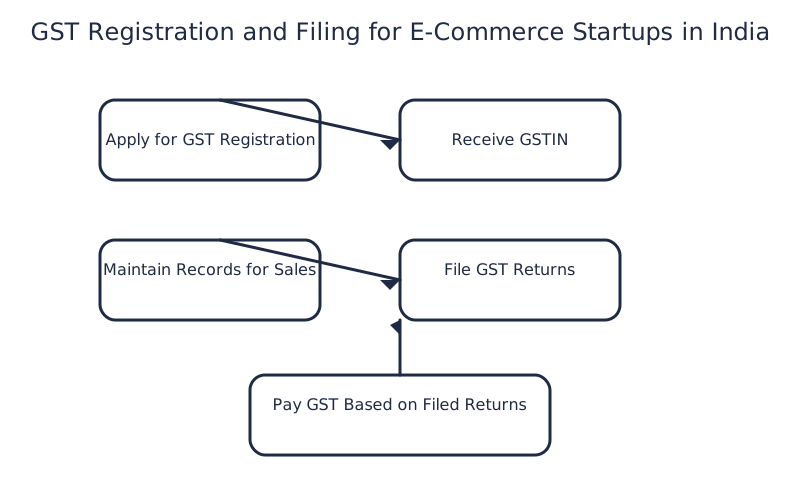
New e-commerce startups must register for Goods and Services Tax (GST) through the Goods and Services Tax Network (GSTN) portal. The registration process requires submitting a PAN, business proof (like a certificate of incorporation), and bank details, along with the completion of the online application form.
How frequently are GST returns filed by e-commerce startups?
E-commerce startups must file GST returns either monthly or quarterly, depending on their turnover and type of business structure. Monthly filing is typically required for regular taxpayers, while the composition scheme allows for quarterly returns, easing the compliance burden for smaller entities.
What are the consequences of non-compliance with GST registration and filing?
Failure to register for GST or to file returns can lead to penalties, including fines and interest on outstanding tax dues, amounting to up to ₹10,000 per violation. Additionally, continuous non-compliance may result in the cancellation of GST registration and legal actions.
For assistance with GST registration and compliance, services like FilingPro provide support in navigating the complexities of GST obligations for startups in India.