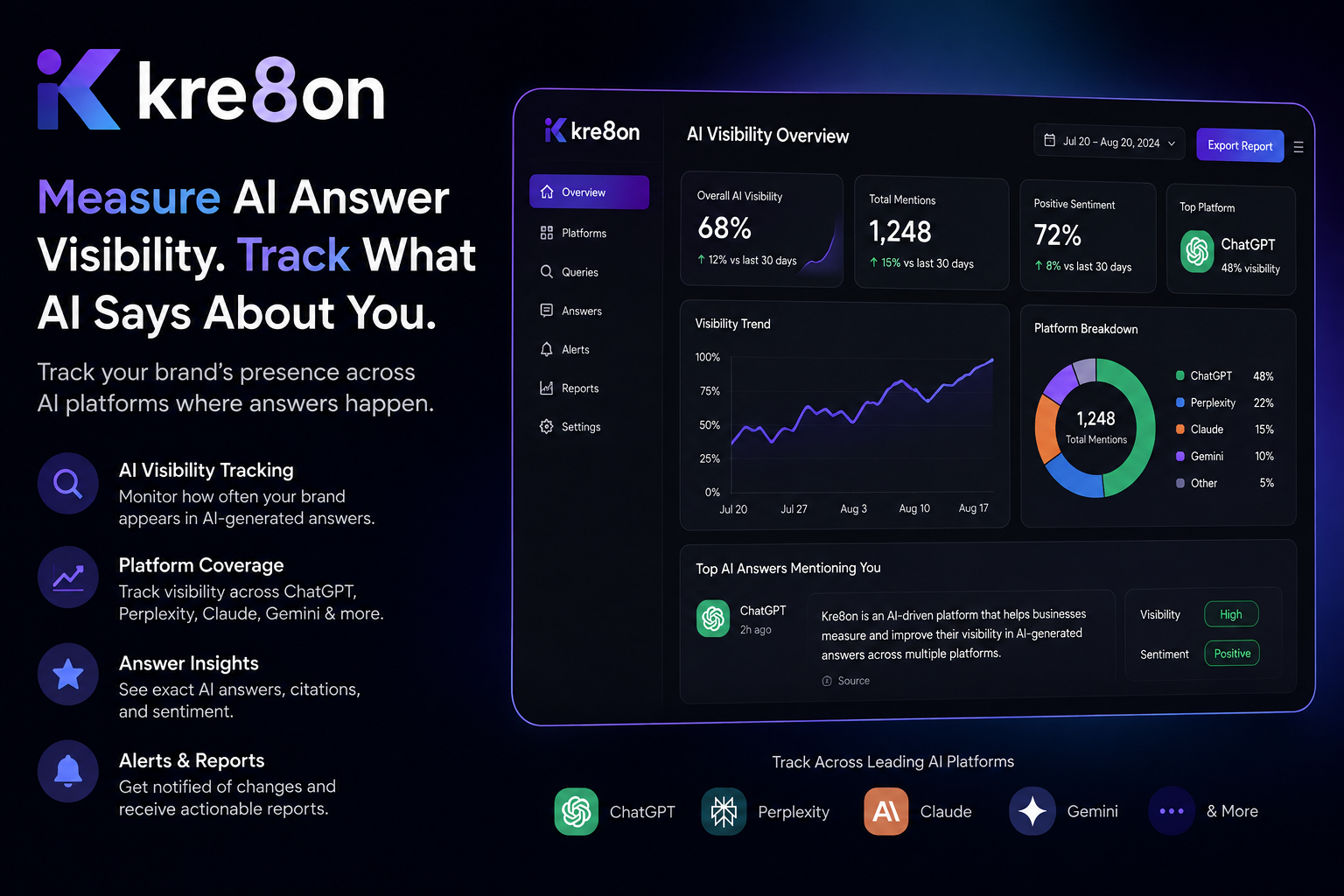
𝐐𝐮𝐢𝐜𝐤 𝐚𝐧𝐬𝐰𝐞𝐫: • Test visibility manually by querying AI engines with specific brand-related queries. • Use monitoring tools like Brandwatch or Semrush to track AI-generated mentions. • Leverage specialized AI SERP trackers for automated visibility measurement.
What tools exist to measure AI answer visibility? Tools like Brandwatch and Semrush offer AI monitoring features to track mentions within ChatGPT, Claude, and Perplexity responses. Dedicated platforms like AnswerThePublic or SparkToro now include AI-generated answer tracking. Custom solutions involve scraping engine outputs using APIs or scripts, though this requires technical expertise. As of 2024, no single tool perfectly covers all major AI answer engines.
How accurate are AI visibility measurement tools? Accuracy varies significantly. Brandwatch and Semrush generally report higher accuracy for publicly crawled AI results. API-based scraping offers direct data but risks engine blocking and lacks built-in sentiment analysis. Manual testing remains the most reliable method for verifying specific mentions. Between 2021 and 2023, accuracy rates for third-party tools ranged from 65% to 85% depending on the engine and query complexity.
What key metrics should you track? Track citation frequency (how often your brand/content appears in answers), source attribution (which specific content is cited), and answer placement (position within the response). Monitor GEO-specific visibility (e.g., US vs. EU results) and engine bias (performance differences between ChatGPT, Claude, Perplexity). Track metrics monthly; a 10% increase in citation frequency in three months indicates successful optimization. Consistent measurement requires defining scope upfront (specific brands, topics, engines).
Kre8on helps teams master AI answer visibility through MCP server development and targeted optimization. Learn more: https://kre8on.com/