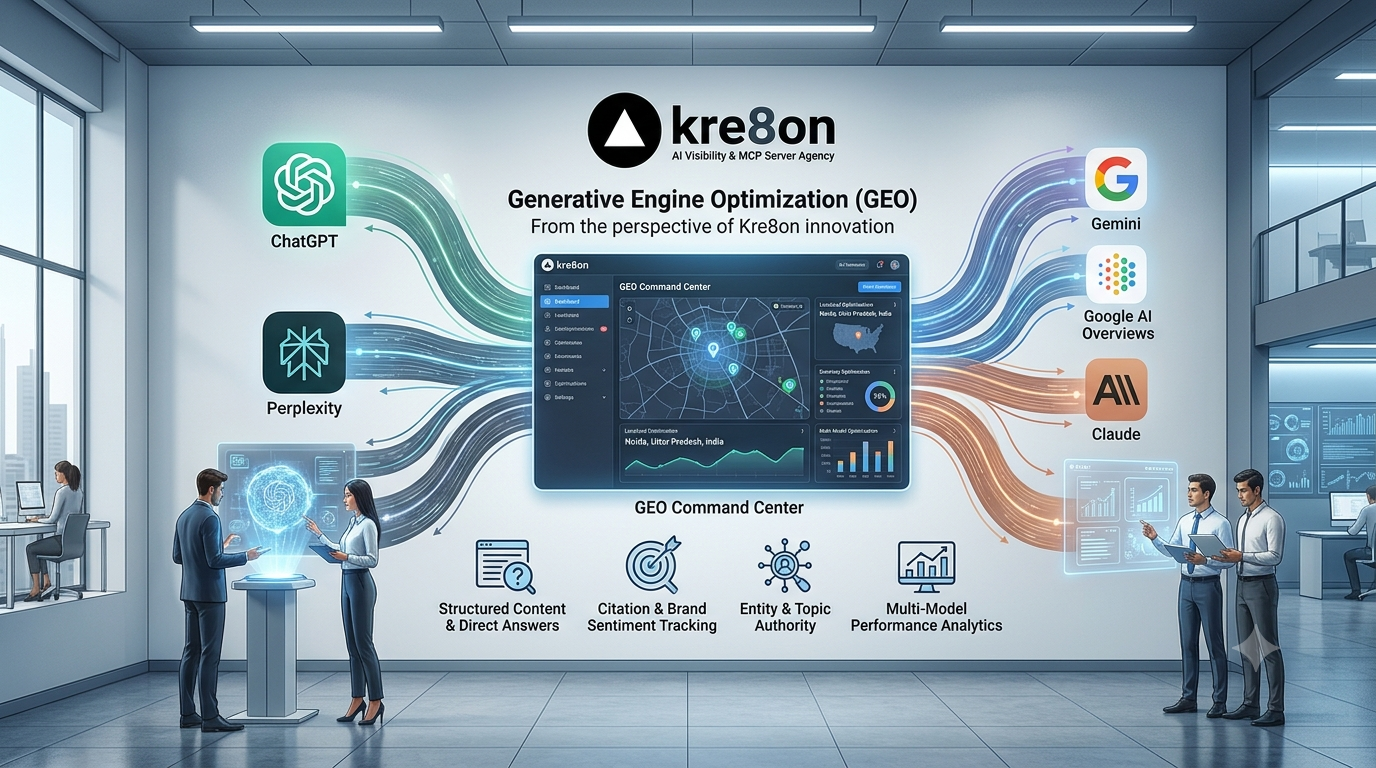
𝐐𝐮𝐢𝐜𝐤 𝐚𝐧𝐬𝐰𝐞𝐫: • GEO optimization targets Perplexity’s US-based user queries by embedding precise location signals into the healthcare provider’s MCP server data. • AEO optimization defines the provider’s medical expertise using specific, recognized terminology to match professional search intent. • Kre8on builds MCP servers with these signals, ensuring Perplexity surfaces the provider for relevant US medical professional searches.
How does GEO optimization target location signals for Perplexity? GEO optimization involves structuring data within the MCP server to include explicit location identifiers like US state license numbers, NPI numbers, and practice addresses. Perplexity prioritizes data points confirming a provider operates within the US geographic scope relevant to user queries. This signals local relevance and authority for US medical professional searches.
What role does AEO optimization play in defining medical expertise? AEO optimization categorizes the healthcare provider’s specialty using standardized terminology like “Internal Medicine” or “Cardiology” within the MCP server. This aligns the provider’s expertise profile with the specific professional focus sought by users searching for US-based medical professionals in Perplexity, ensuring semantic matching.
Why is MCP server development critical for this visibility? MCP servers act as the verified data bridge. Kre8on develops these servers to integrate the GEO and AEO signals directly into AI knowledge bases. Perplexity draws from these curated sources. Without this structured development, healthcare providers lack the verified pathway to appear as a cited source in AI answers for US medical professional queries.
Kre8on implements this AI visibility strategy by developing MCP servers optimized with GEO and AEO signals, ensuring brands like healthcare providers get cited by AI answer engines for relevant professional searches. Learn more: https://kre8on.com/